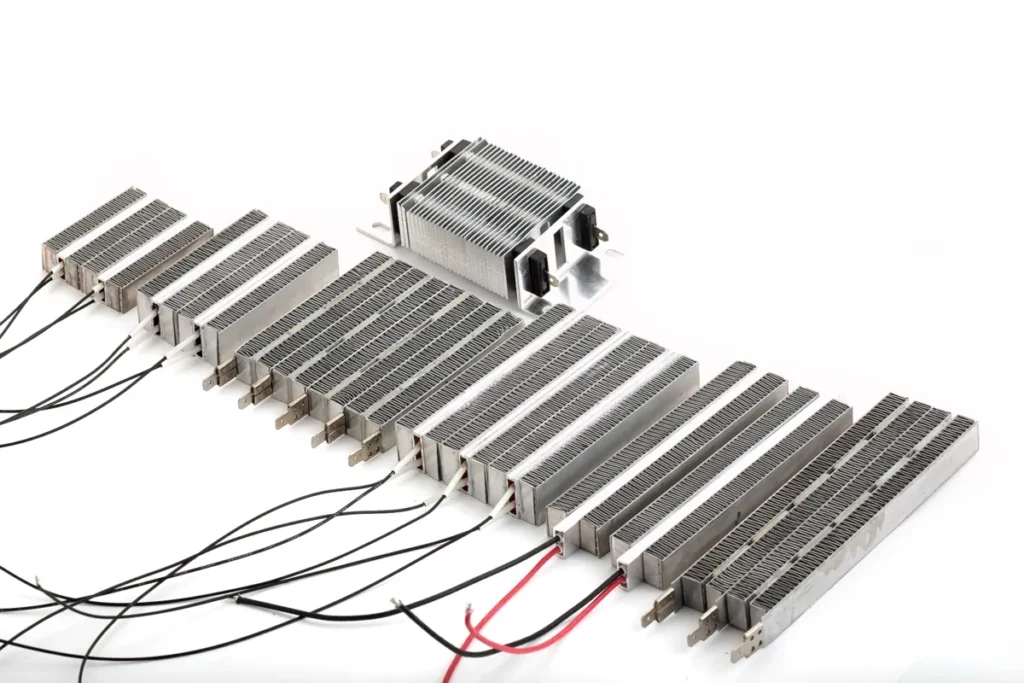
Embracing Warmth: Unveiling the Application of PTC Heating Element in PTC Heaters
The working principle and characteristics of PTC heating elements
PTC stands for Positive Temperature Coefficient. As a ceramic PTC heating element warms up, its electrical resistance increases sharply within its characteristic temperature range.
At a fixed supply voltage, increasing resistance reduces current and electrical power input, helping regulate heat output. Actual operating temperature and power depend on the component, voltage, airflow, ambient conditions and installation.
Self-regulation does not eliminate overheating or fire risks. Complete heaters still require appropriate insulation, thermal protection and testing for the intended application.
Features of PTC heating elements
Self-regulating heat output: Rising resistance reduces power input as the element warms. The resulting operating point depends on the heater design and operating conditions; it is not a universal fixed temperature.
Warm-up and energy use: Warm-up time depends on the rated power, thermal mass and heat transfer. PTC technology alone does not establish a fixed energy-saving percentage compared with resistance-wire heaters. Compare complete systems under the same test conditions.
Safety considerations: Self-regulation can help limit heat output, but safe operation also requires suitable mounting, insulation, wiring, airflow and thermal protection. Follow the component specifications and validate the finished product.
Application-specific selection: Choose a PTC heating element for the required voltage, power, dimensions and environment. Environmental or compliance claims should be supported by documentation for the specific component and finished heater.
Applications of PTC heating elements in PTC heaters
PTC heating elements can be integrated into heating equipment for homes, offices and industrial applications. The required component and protection measures depend on the finished product and its operating environment.
Home heating
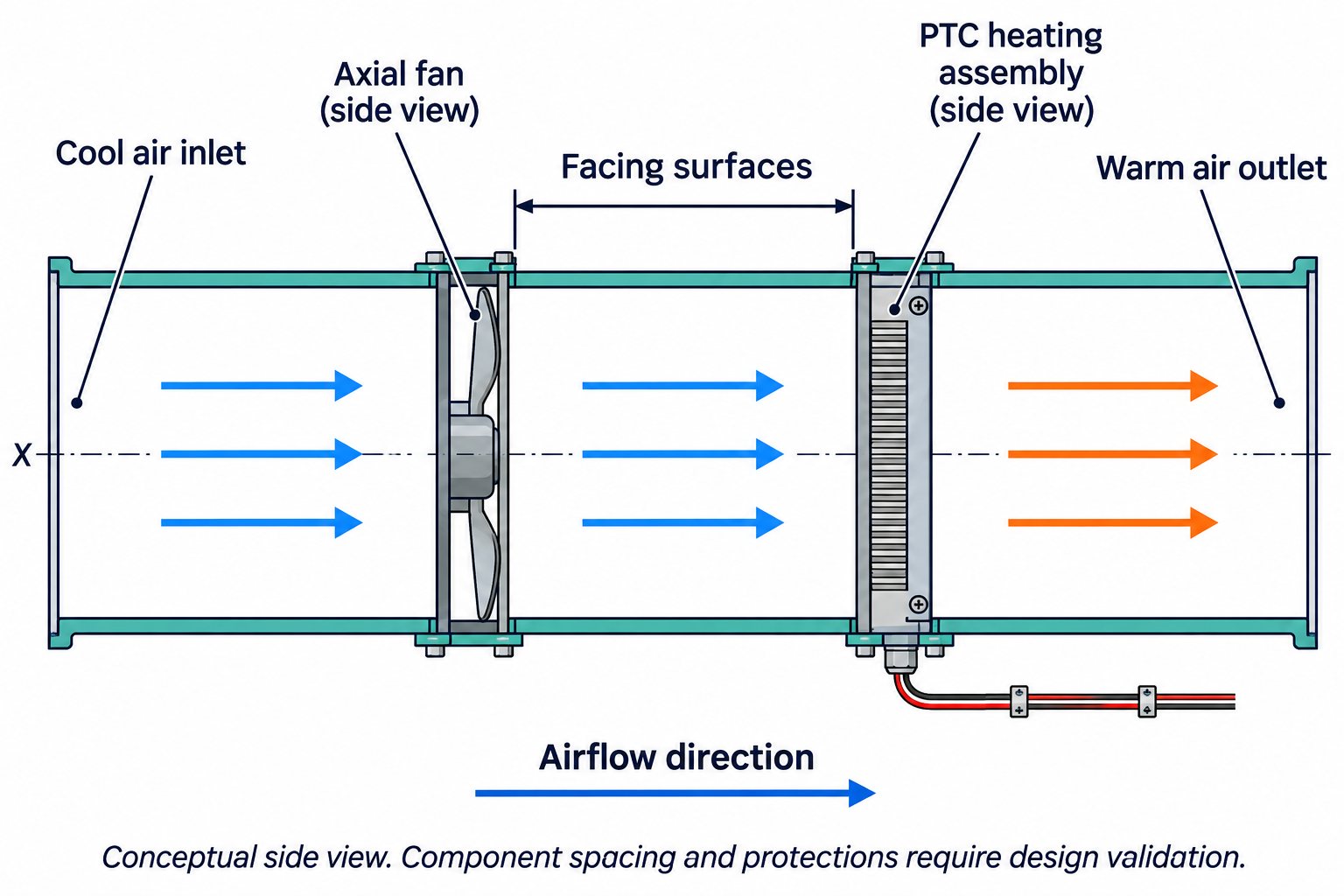
In fan heaters and other household heating equipment, a fan moves air across the PTC heating assembly to distribute heat. Heater power, airflow, outlet temperature, noise and installation space must be considered together. A component power rating alone does not establish how quickly it will heat a room. For component options, see our PTC air heating assemblies.
Office applications
PTC heating assemblies can be used in suitable compact or localized heaters for occupied spaces. The finished product needs to be selected and tested for its intended use, including electrical safety, surface temperatures and abnormal operating conditions. For ducted-air designs, review the requirements discussed in our Air Curtain and HVAC air heating application guide.
Industrial applications
Depending on the design, PTC heaters can support equipment warming and frost or condensation control. Selection should account for ambient temperature, enclosure size, humidity, required heat output and any exposure to dust or water. Verify suitability for the specific environment rather than assuming every PTC heater is interchangeable.
Conclusion: selecting PTC heating elements for your heater
PTC heating elements provide self-regulating heat output for suitable heater designs. Successful integration depends on matching the component to the operating voltage, required heat output, airflow, available space and application environment.
For a component selection discussion, prepare your supply voltage, target power and outlet-air temperature, airflow, installation dimensions and intended use. These details help assess a suitable PTC air heater and the testing needed for your finished product.
Find a PTC air heater for your application
Review the LC Electronics PTC Air Heater range for fin-type heating components designed for appliance integration.
Ready to discuss a design? Prepare your heating requirements with our Heater Selector, or send an application inquiry. Include supply voltage, target power, airflow, installation dimensions, operating environment and expected quantity.
You can also email info@lcheating.com. Component suitability and performance should be confirmed for your finished appliance before sample approval.
