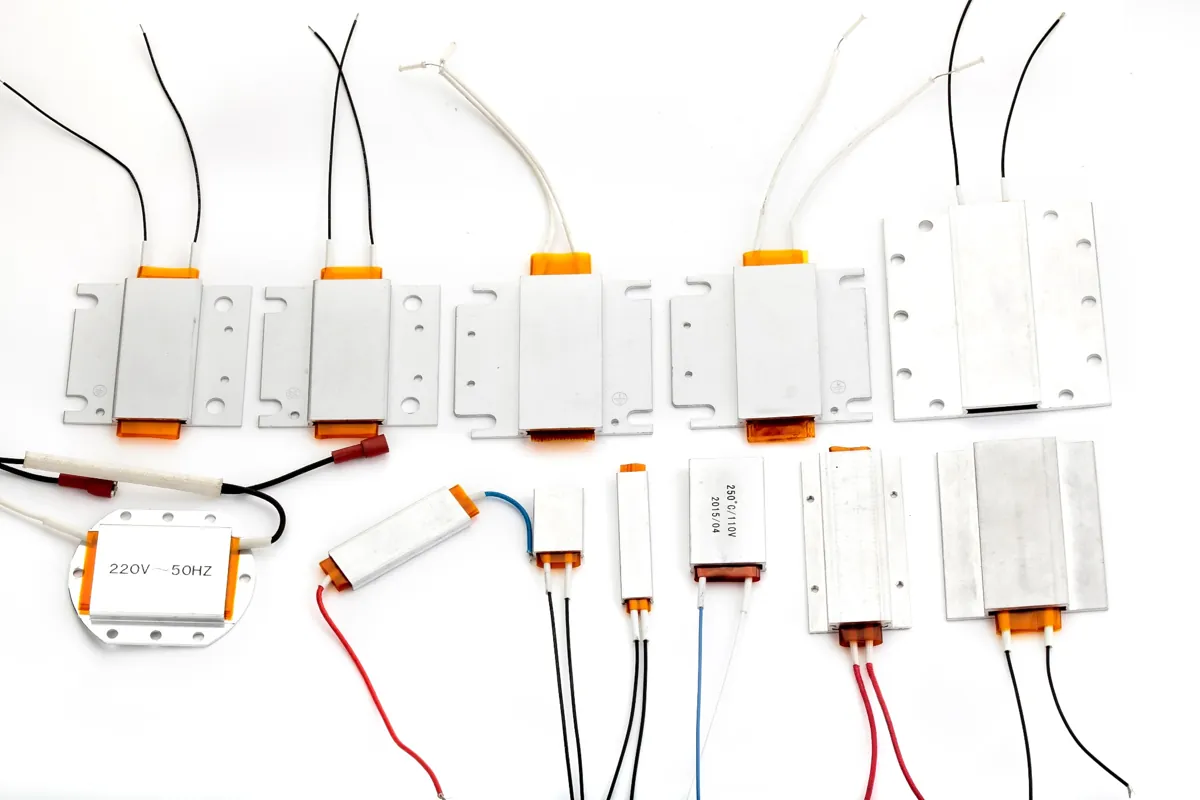
PTC Heaters for Water, Liquid & Steam Applications
PTC heaters are useful where self-regulating behavior and compact packaging are valuable. Dry-run performance and protection must be validated for the specific assembly.
Common options include 12/24V DC and 110–240V AC depending on heater family and application.
Temperature
PTC surface temperature can be selected to match the application. Final appliance temperature depends on heat transfer and control design.
Power
Stabilized power depends on the liquid, inlet temperature, liquid volume or flow rate, heater contact and heat transfer. Share the supply voltage, target heating output, temperature rise or heat-up time, available dimensions and mounting arrangement.
For steam applications, also provide the required steam output and operating pressure. Include temperature sensing and control, low-water and dry-run protection, sample quantity, production demand and destination market. Final performance must be tested in the complete appliance.
Custom PTC heating elements, air heaters and liquid heating solutions for beauty appliances, pet care, smart appliances, water/steam and HVAC applications.