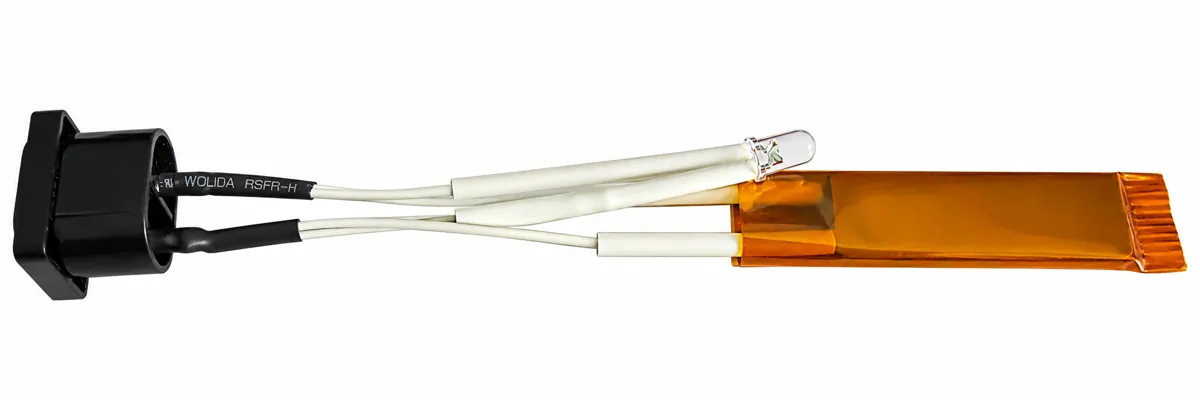
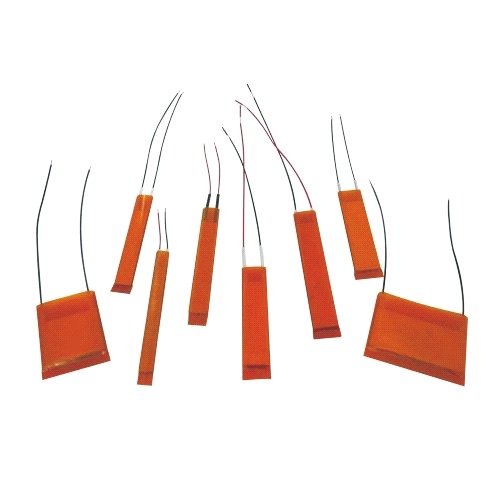
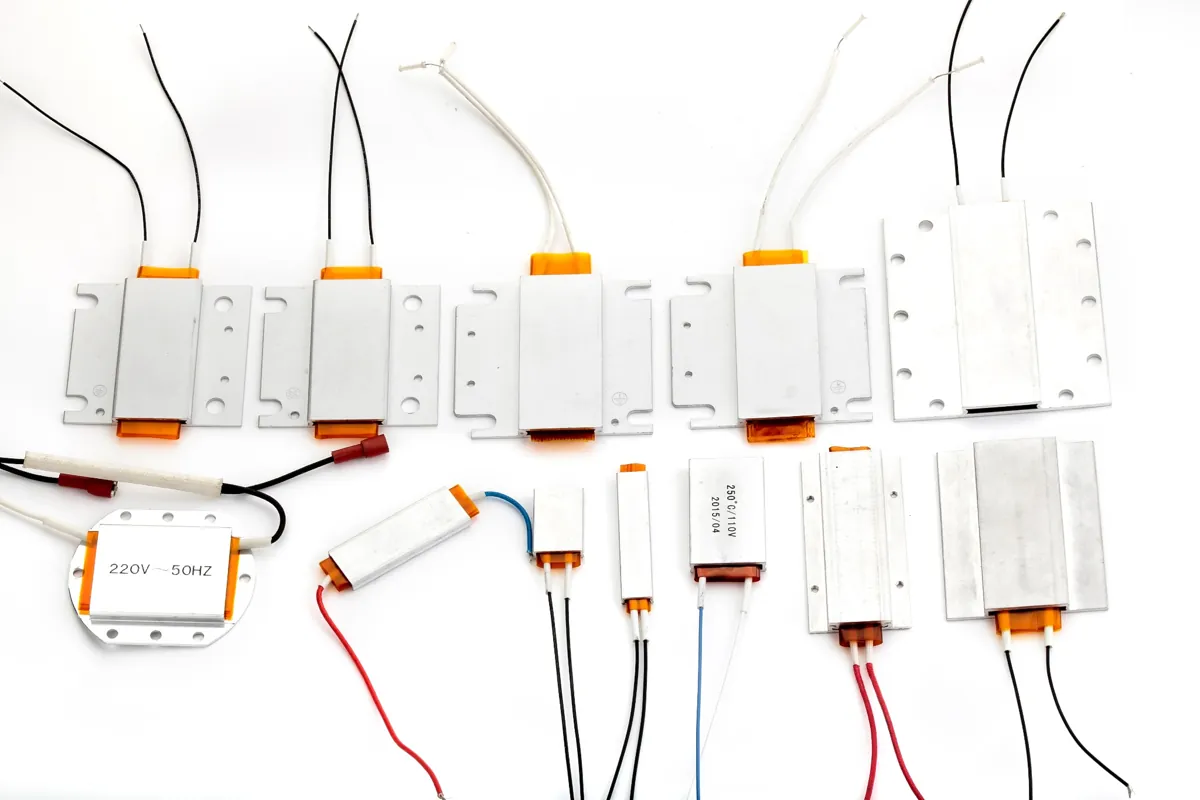
PTC contact-heating components for manufacturers of fragrance wax melt warmers and depilatory wax heaters. Explore insulated-film PTC first, followed by aluminum-shell PTC, and share your assembly requirements for engineering review.
Select the PTC temperature characteristic around the vessel and wax operating requirements. Confirm final wax temperature with the appliance controls and assembly tests.
Custom dimensions and voltage
Define the contact area, heater length, width, mounting holes and supply voltage. We review a suitable construction against your drawing.
Heat-transfer efficiency
Match contact area and mounting to the vessel so heat reaches the intended surface. Assess warm-up and holding power in the finished assembly; no universal energy-saving percentage is assumed.
Specification and sample evaluation
Move from a defined specification through sample evaluation to an agreed production supply plan.
From specification to production
Send vessel dimensions, contact surface, voltage and target operating conditions.
Review the proposed heater construction and model-specific parameters.
Evaluate samples for warm-up, temperature distribution and stabilized power.
Agree the approved specification, quantity and delivery requirements.
Request a heater recommendation
Fragrance wax melt warmers
For fragrance warmers, describe the wax formulation, vessel material, removable-dish arrangement and intended heating cycle. Provide the wax quantity, target wax temperature, starting conditions and warm-up requirement. Define these targets for your appliance; a heater surface-temperature rating is not a wax-temperature specification.
Depilatory wax heaters
For depilatory wax heaters, include vessel capacity, the intended wax formulation and working-temperature range, and whether the appliance must melt a full charge or maintain already-melted wax. Describe the temperature sensor, control arrangement, removable-pot contact and intended operating cycle. Confirm the working conditions against the wax and finished-appliance requirements.
Compare the heater constructions
First: insulated-film PTC. Review the available footprint and thickness, the contact surface, electrical insulation and lead routing against your assembly drawing. Include the mounting arrangement and the complete stack between the heater and the vessel.
Second: aluminum-shell PTC. Compare the shell envelope, mounting features, contact area and fastening arrangement with the same assembly requirements. Confirm how heat passes from the shell into the vessel or heating plate.
This is LC’s review order for wax-warmer projects, not a guarantee that one construction suits every appliance. Final selection depends on the drawing, electrical specification and sample results. Do not assume that either contact-heater construction is suitable for immersion in wax.
Agree sample acceptance conditions
Test setup: record supply voltage and AC/DC, ambient and starting wax temperature, wax type and quantity, vessel, lid condition, mounting and control settings.
Warm-up and holding: agree the target, measurement positions and permitted variation before testing. Check temperature distribution, overshoot and holding behavior in the assembled appliance.
Electrical and thermal results: record start-up behavior, operating power under the agreed conditions, and wax, vessel and heater temperatures separately. Compare samples using the same setup and duty cycle.
Protection and release: review sensing, independent over-temperature protection, insulation and lead routing. Agree the approved drawing, sample results and model-specific specification before production supply.
Send the assembly drawing, supply requirements, sample quantity, expected production demand and destination market. If a requirement is not yet known, identify it as an open item for engineering review.
Custom PTC heating elements, air heaters and liquid heating solutions for beauty appliances, pet care, smart appliances, water/steam and HVAC applications.